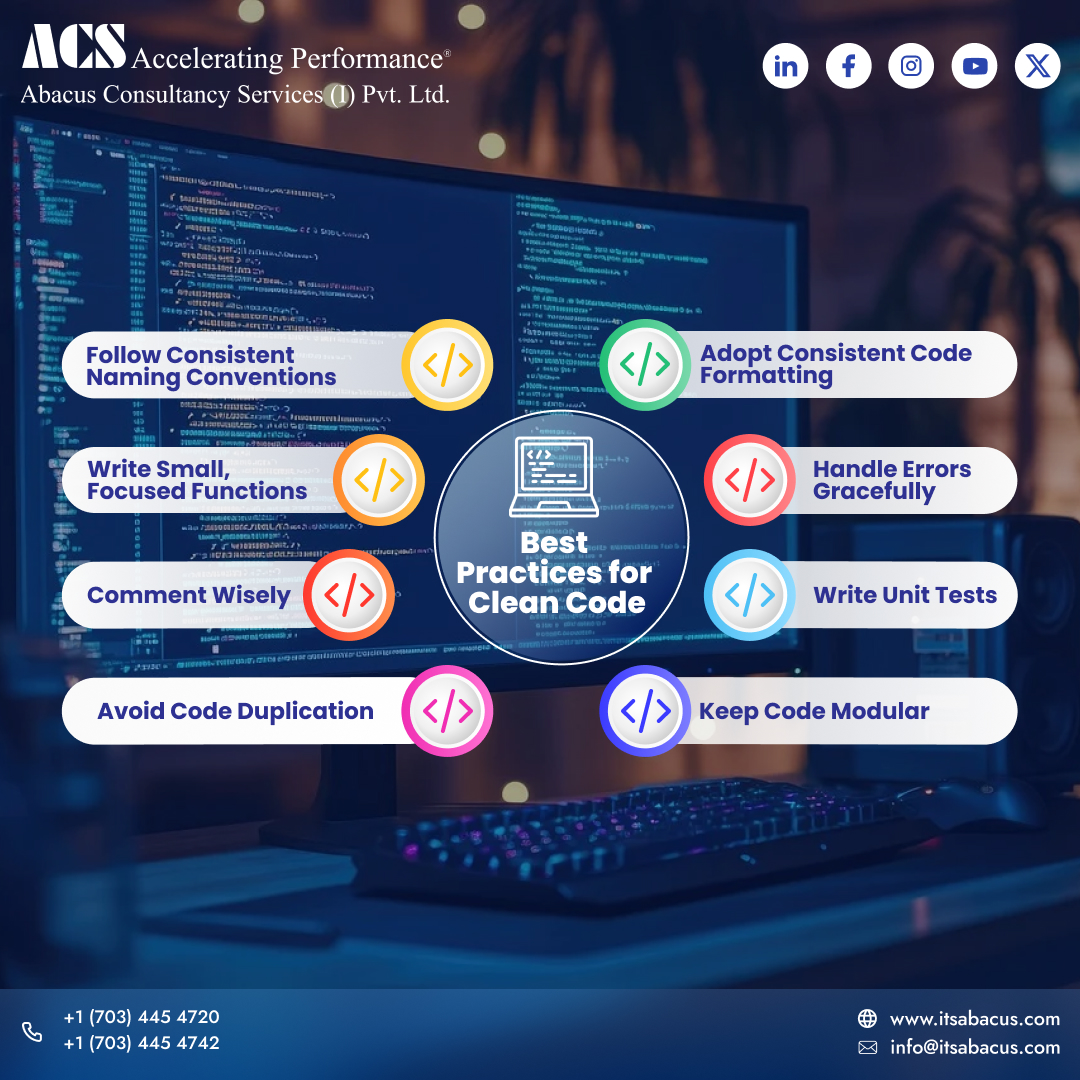

1. Follow Consistent Naming Conventions
- Use descriptive and meaningful names for variables, functions, and classes.
- Prefer
camelCasefor variables and functions, andPascalCasefor classes. - Avoid single-character names unless they serve a clear purpose (e.g.,
iin loops).
2. Write Small, Focused Functions
- Functions should perform a single task (Single Responsibility Principle).
- Aim for functions to be small and easy to understand, ideally 20-30 lines or fewer.
3. Avoid Code Duplication
- Reuse code through functions, modules, or libraries.
- Apply the DRY principle (Don’t Repeat Yourself).
4. Comment Wisely
- Use comments to explain why the code does something, not what it does (the code should make that clear).
- Write meaningful documentation for complex logic or APIs.
5. Adopt Consistent Code Formatting
- Use a linter or formatter (e.g., ESLint for JavaScript, Prettier) to enforce coding standards.
- Maintain proper indentation and spacing.
6. Handle Errors Gracefully
- Implement proper error handling and logging.
- Avoid swallowing exceptions; provide meaningful messages to help debugging.
7. Write Unit Tests
- Cover critical code paths with automated tests.
- Aim for high code coverage but prioritize testing core functionalities.
8. Keep Code Modular
- Break your codebase into logical modules or components.
- Follow the Separation of Concerns principle to avoid tangled dependencies.